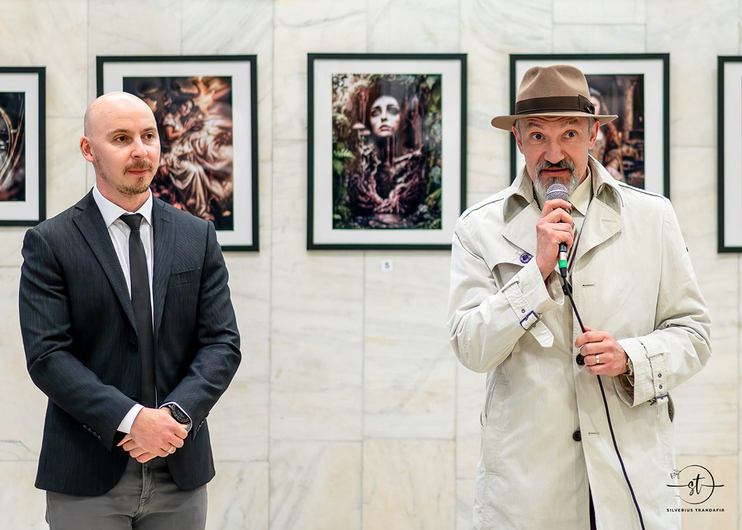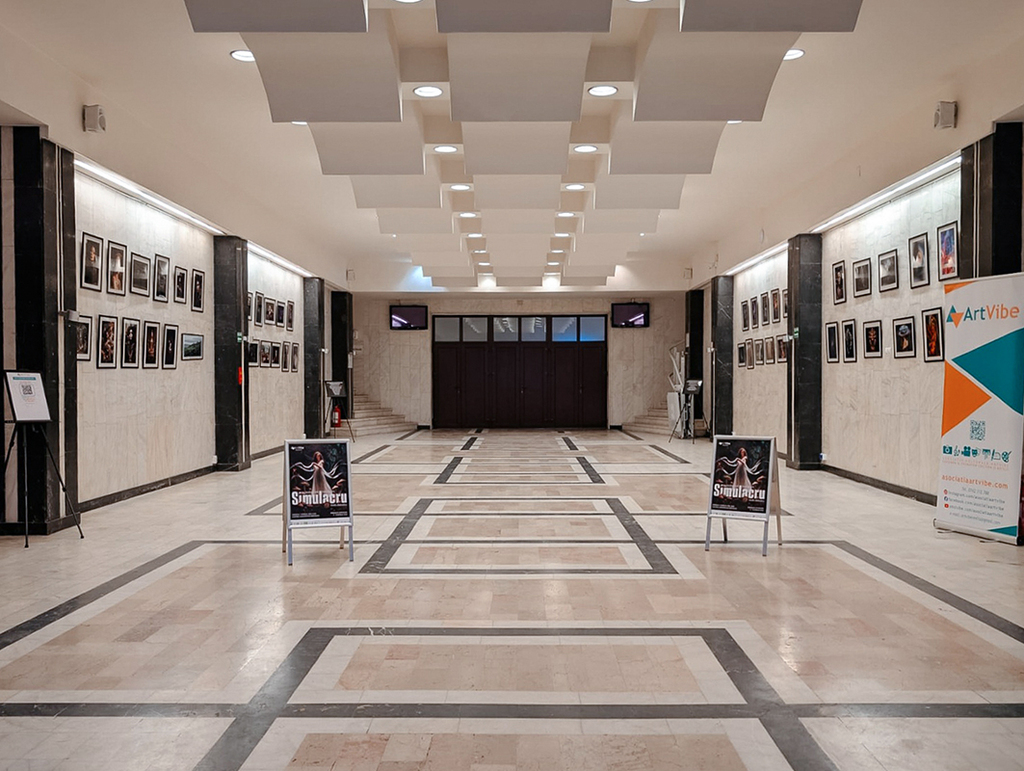
On April 3rd, I was invited to speak at the opening of Simulacru – Generative Thoughts, an exhibition by the emerging artist Ovidiu Belceanu, held in the Foyer of the Babeș-Bolyai University Centre in Reșița — a context that prompted a series of essential reflections on the profound transformations of contemporary art.
We are, without doubt, living through a turning point: the image is no longer created in the traditional sense — it is generated. We are no longer speaking solely about the relationship between the artist and the work, but about an expanded ecosystem in which the artist, algorithms, and data all intervene. This shift is not merely technological, but conceptual — one that reconfigures the very nature of the creative act.
Generative art, in the context of artificial intelligence, fundamentally changes how we understand the artistic process. In the classical paradigm, the artist controlled every stage of creation; today, they become something closer to a systems architect — establishing rules, parameters, and initial conditions, while the final image emerges as the result of an autonomous process. The artist no longer produces form directly, but configures the framework from which it arises.
This direction continues, in technological form, the idea formulated in conceptual art by Sol LeWitt, who held that the concept is more important than the execution. In the case of artificial intelligence, however, the delegation of execution takes on a radical dimension: it is no longer a matter of another human agent, but of systems trained on massive volumes of visual data.
And here a crucial difference emerges. Algorithms do not create from nothing — they are trained on images, effectively on the entire visual culture accumulated globally up to the present. Every generated image thus becomes a statistical synthesis of the past, a recombination of what has already existed. In this context, notions such as originality, authorship, and authenticity become profoundly unstable.
This question is deepened by the theoretical perspective of Joana Zylinska, who argues that systems of algorithmic generation are never neutral. They do not merely produce images — they construct and reproduce cultural structures. In other words, algorithms function as active media for the reconfiguration of visual culture, filtering and redistributing existing meanings.
A telling example is the viral TikTok phenomenon known as "AI Barbie." In this trend, users generated versions of the Barbie doll associated with various cultural contexts. The results made it plainly visible that these systems reproduce existing patterns: the American Barbie was represented as highly colourful and exuberant; the German Barbie included visual elements with sensitive historical resonances; the Sudanese Barbie was placed in arid landscapes and, at times, associated with military contexts.
These representations are not coincidental. They reflect the way in which training data carries and transmits stereotypes, hierarchies, and cultural biases. Artificial intelligence does not "understand" culture, but reconstructes it statistically — and in doing so, it may consolidate or amplify existing clichés.
At this point, the discussion can no longer remain at a purely technological level. As Joana Zylinska suggests, a shift of emphasis toward responsibility becomes necessary. The contemporary artist is no longer merely an image-maker, but a curator of algorithmic processes.
Their responsibility extends across the entire chain of production: from the choice of tools and data, to the manner in which images are generated and presented to the public. Because these images can convey — sometimes subtly — stereotypes and problematic narratives, the artist becomes a critical mediator between technology and society.
The fundamental question, then, is no longer "what do we create with AI?", but "how and where do we deploy these systems?" — because artificial intelligence does not only generate images; it contributes to generating ways of seeing the world.
And these modes of representation, however sophisticated the technologies that produce them, ultimately remain a human responsibility. It is not the algorithm that determines meaning, but the context in which it is used. In this equation, the artist does not disappear — they are transformed: from direct creator, into curator of the possible and, at the same time, into an ethical actor within contemporary culture.
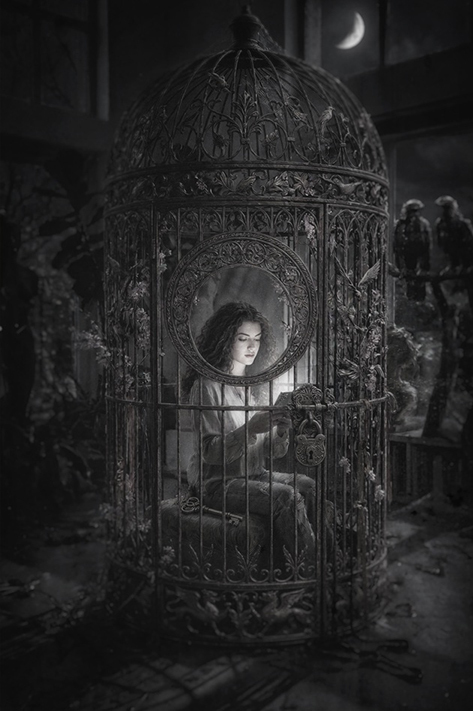
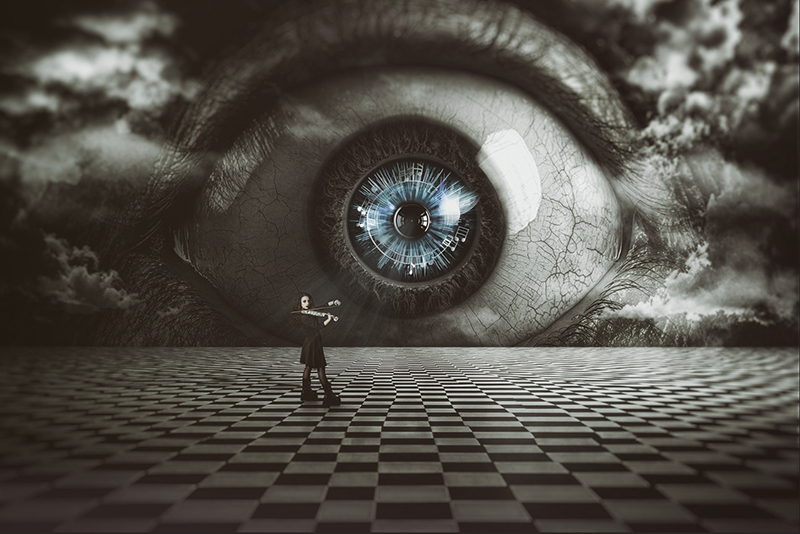
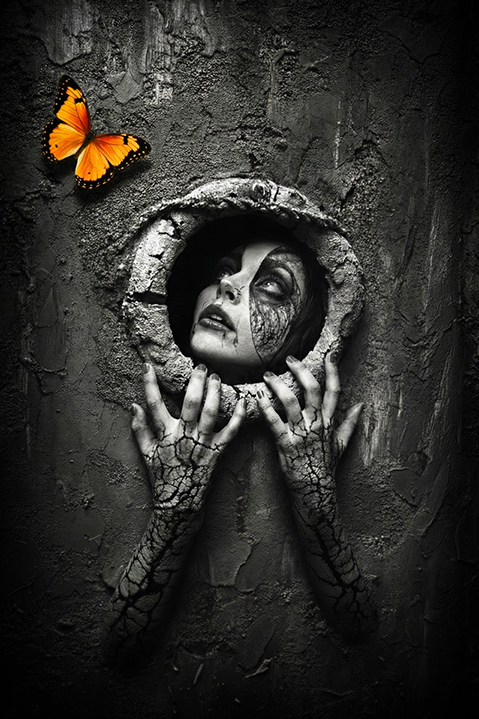
Images are part of the exhibition Simulacru – Generative Thoughts by artist Ovidiu Belceanu.