0009-0008-4524-7740

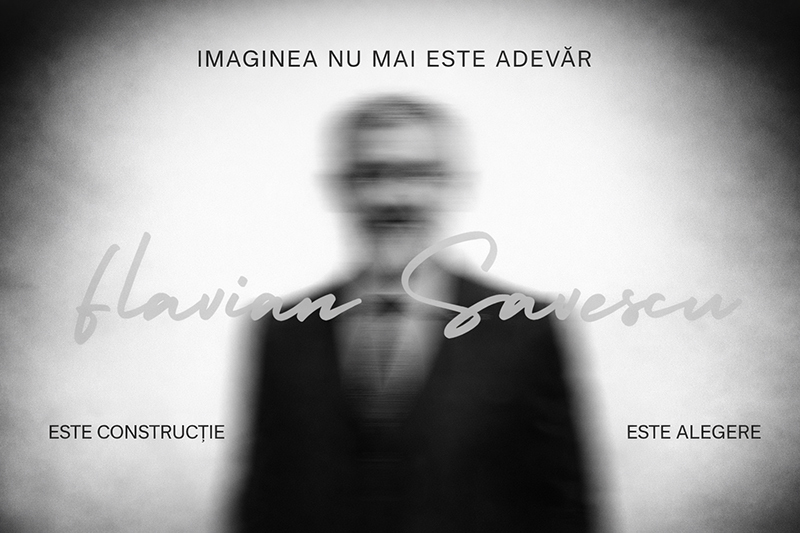
The image is no longer a representation of reality.
It is a space of construction.
0009-0008-4524-7740
My research is not separate from the image — it is part of the process of construction.
I work at the intersection of photography, digital intervention, and generative systems, exploring the way in which the image is produced, modified, and reinterpreted. Not from the outside, as a theoretical observer, but from within the practice — where the aesthetic decision and the critical question converge.
I am interested in the relationship between author, algorithm, and the imaginary.
The image no longer functions as evidence — but as the result of a process in which human intention and technological logic coexist, negotiate, and sometimes contradict each other. My research follows precisely this tension.
I practise a hybrid form of working, in which photography becomes a starting point, not an end.
I intervene on the image, reconstruct it, decompose it, and reconfigure it — using both digital tools and generative processes. The central methodological framework is the AIM triad (Attention–Intention–Message), developed in the volume From Real to Augmented and consistently applied across personal artistic projects.
Recent technological transformations have fundamentally altered the status of the image.
In a culture dominated by simulation and reproduction, visual meaning is no longer fixed, but negotiable. My research positions itself in this space of instability — not to lament it, but to articulate it critically.
Not answers, but tensions.
Not certainties, but possibilities.
Not a stable image,
but one in continuous becoming.
The work analyses the profound transformations of the visual artist in an era in which photography, digital media, and artificial intelligence converge. It traces the journey of the image from documentation to simulation, proposing a framework — the AIM triad — for understanding authorship, artistic intention, and responsibility in a visual environment dominated by algorithms. It integrates theory, case studies, and personal artistic practice.
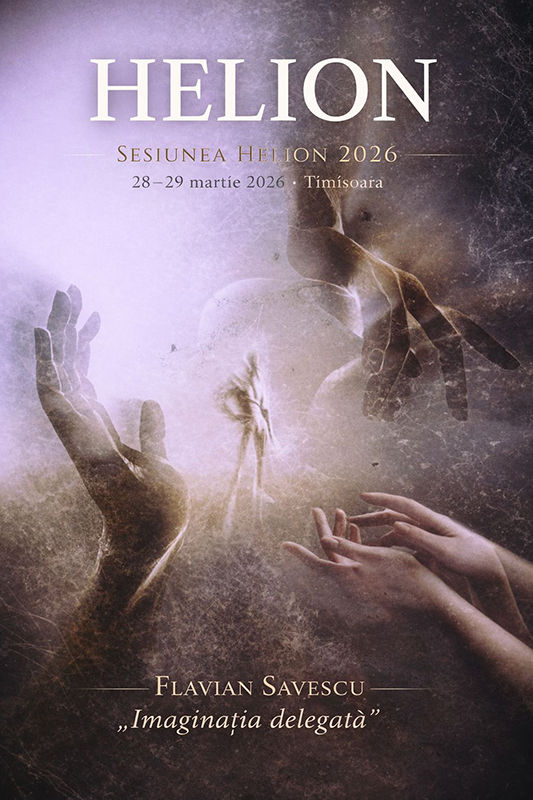
The essay begins from a question that often remains implicit: what happens to human imagination in a context where part of the production of the visual imaginary is taken over by technological systems?
The text does not approach the problem from a technical perspective, but from a conceptual and critical one. What is at stake is not the functioning of algorithms, but the transformation of an essential human faculty — the capacity to imagine — into a process distributed between human, system, data, and digital infrastructure.
Delegated Imagination is not a text about technology, but about the human condition in relation to its own extensions. The question is not whether machines imagine, but what it means to imagine together with them — and what remains to be defended, redefined, or assumed in this process.
Presented at the Helion Session (41st edition), the text continues the research directions from the volume From Real to Augmented.
Further information at www.helionsf.ro
Published in Revista Cultura, section Fields of Expertise, 24 March 2026
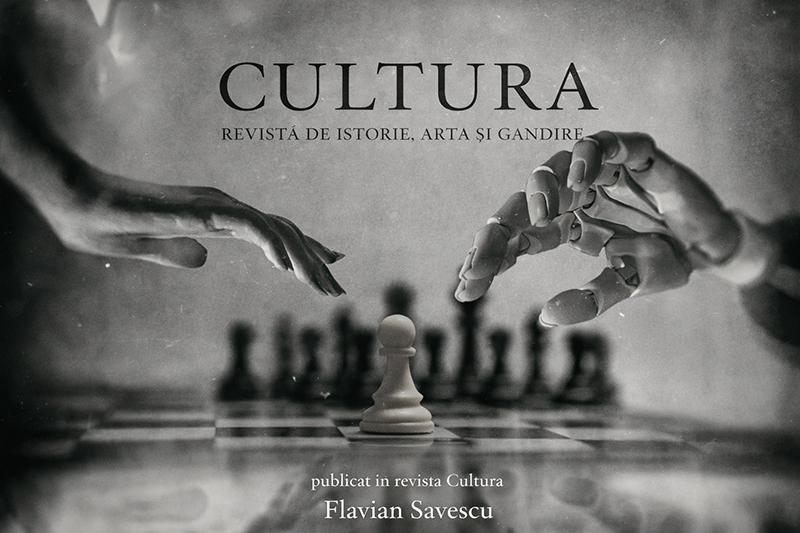
The essay addresses three inseparable dimensions of contemporary artistic practice: the transparency of the creative process, the crisis of authorship in the algorithmic era, and cultural responsibility toward the invisible bias of generative systems.
Drawing on concrete cases and a theoretical framework integrating contributions by Zylinska, Crawford, Manovich, and Galanter, the text proposes ethics not as an external norm imposed on creation, but as its infrastructure — something that precedes the aesthetic decision and conditions it.
The central argument: in a world where the image can be anything, process is what makes it authentic.
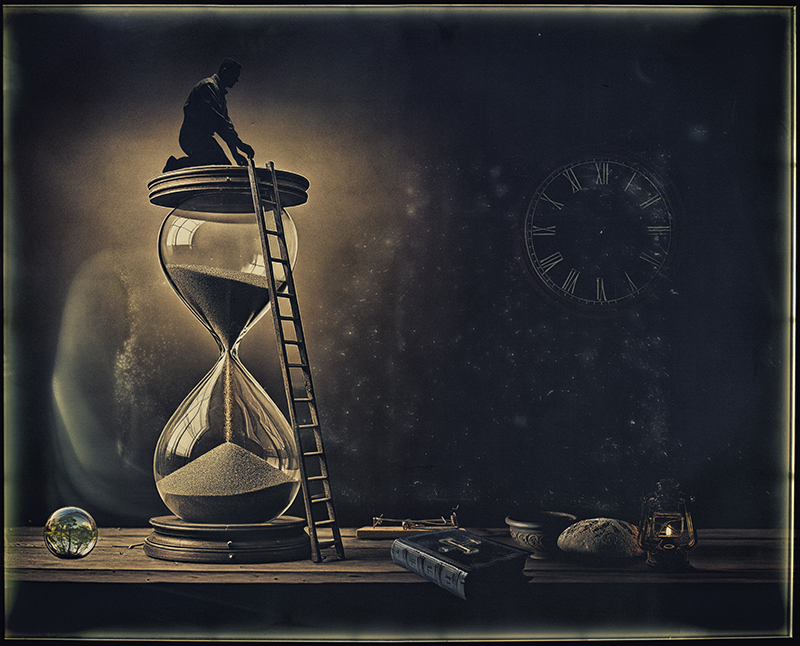
A visual exploration of memory and temporality in the image. The project starts from the question of whether an image can preserve traces of a time that was never photographed — an interstitial time, uncaptured, yet reconstructable through digital intervention and generative process. In terms of the AIM triad, Between Times functions as an exercise in applied intention: every processing decision is, simultaneously, a choice about what deserves to be remembered and how.
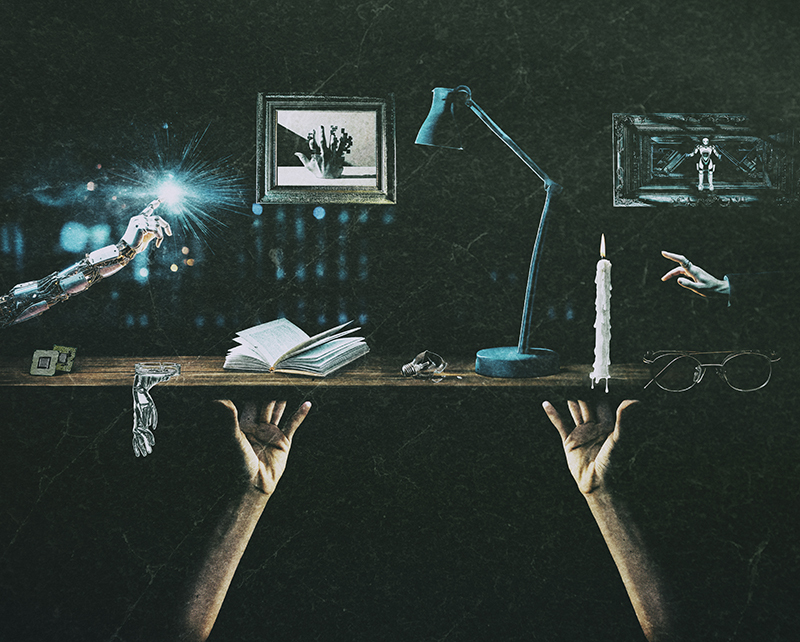
An investigation into the relationship between the human, the symbol, and digital intervention. The project explores what happens when a visual symbol is constructed not from a lived experience, but from an algorithmic logic — and to what extent the result can still carry situational aura. The bridge in the title is not a built structure, but a space of tension: the place where artistic intention and the generative process meet without resolving.
Research does not seek to define the image — but to put it into question. To expose its mechanisms, to test its limits, and to reconfigure, with each project, the relationship between author, tool, and meaning.